Start with the right tree
Emerald ash borer wiped out a large share of the ash trees that once lined streets and backyards across the Grand Rapids area. The lesson was that planting too much of one kind of tree is a gamble. When we plan a planting, we look at what is already on the block and pick something different, so one pest cannot clear the street again.
Questions we ask before choosing a species:
- How big will it get? A tree that tops out at 60 feet does not belong under power lines or six feet from the foundation.
- How much sun? Some trees need full sun; others handle the shade of a neighbor's maple.
- What is the soil like? Sandy, fast-draining spots and heavy, wet low spots suit very different trees.
- What do you want from it? Shade for the west side of the house, fall color, flowers, a screen from the road, or food for birds.
Good choices for West Michigan yards often include oaks, hackberry, Kentucky coffeetree, tulip tree, serviceberry, hornbeam, and disease-resistant elms or maples in the right setting. We will steer you away from trees that are prone to storm breakage or invasive spread.
How we plant
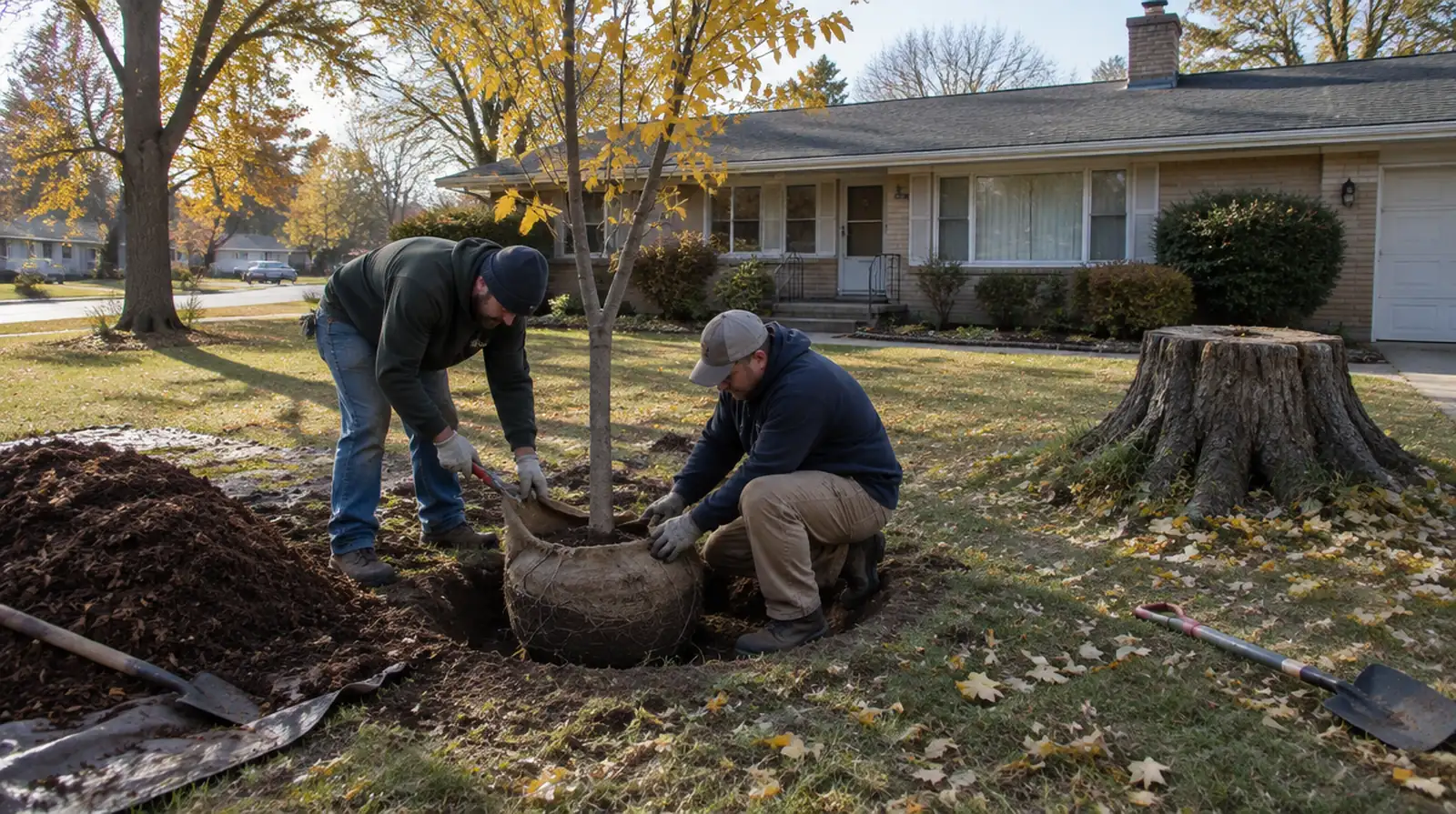
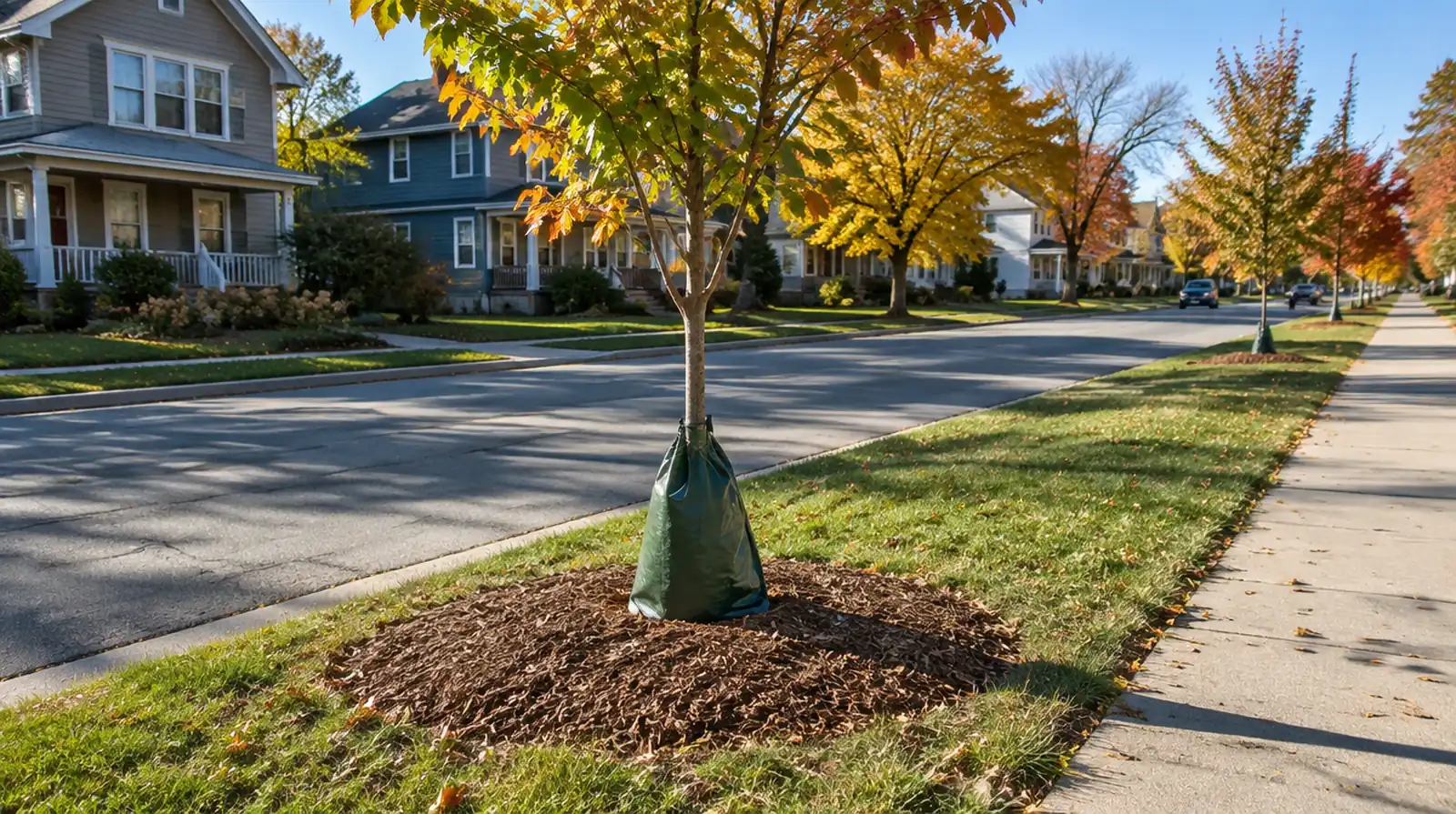
Most new trees that die in the first few years were planted too deep. We find the root flare, where the trunk widens into the roots, and set it right at or slightly above grade. The hole is dug two to three times as wide as the root ball but no deeper, so the tree sits on undisturbed soil and will not sink. Burlap, twine and wire baskets are cut back from the top of a balled-and-burlapped tree. Container trees get circling roots teased out or cut. We backfill with the native soil, water it in to settle air pockets, and spread a wide, flat ring of mulch two to three inches deep, kept a few inches off the bark. No volcano mounds.
When to plant
Spring, once the ground thaws, and fall, from late September until the ground starts to freeze, are the best windows here. Fall planting gives roots time to grow in cool soil before summer heat arrives. Summer planting can work with careful watering, but the stress is higher.
Aftercare that keeps it alive
A new tree needs regular deep watering for at least the first two growing seasons, especially in dry stretches in July and August. A slow-release watering bag makes that easier. Keep mowers and string trimmers away from the trunk; the mulch ring helps. Stakes, if needed at all, come off after the first year. A light structural pruning a few years in sets up a strong shape for the decades ahead.
Planting near the street
The strip between the sidewalk and the curb usually belongs to the city. In Wyoming, planting a tree in the public right-of-way requires a permit from the City Engineer, and the City sets rules on minimum trunk size and which species are allowed. Ash and elm, for example, are not permitted there. Call the city before planting in that strip, and call Miss Dig 811 before any digging, so buried lines are marked. The city also has a Tree Commission and volunteer planting programs if you want to get involved in the wider canopy.
Replacing a tree we removed
If we are taking down a dead ash or a storm-damaged maple, we can grind the stump and plant a replacement in the same visit or the next season. Note that the new tree usually goes a few feet away from the old stump, where the soil is not full of wood chips and decaying roots.
Questions
How big a tree can you plant?
Smaller trees establish faster. A tree with a trunk about an inch and a half to two inches thick often catches up with a much larger one within a few years.
Will the tree survive?
Planted right, most do. What happens after we leave matters most, so we give you a simple watering schedule and tell you what warning signs to watch for.
Can you also take out the old stump?
Yes. See stump grinding and tree removal.
Ready to plant? Call (616) 612-2765 and tell us where the tree is going. We will help you choose and quote the planting.